
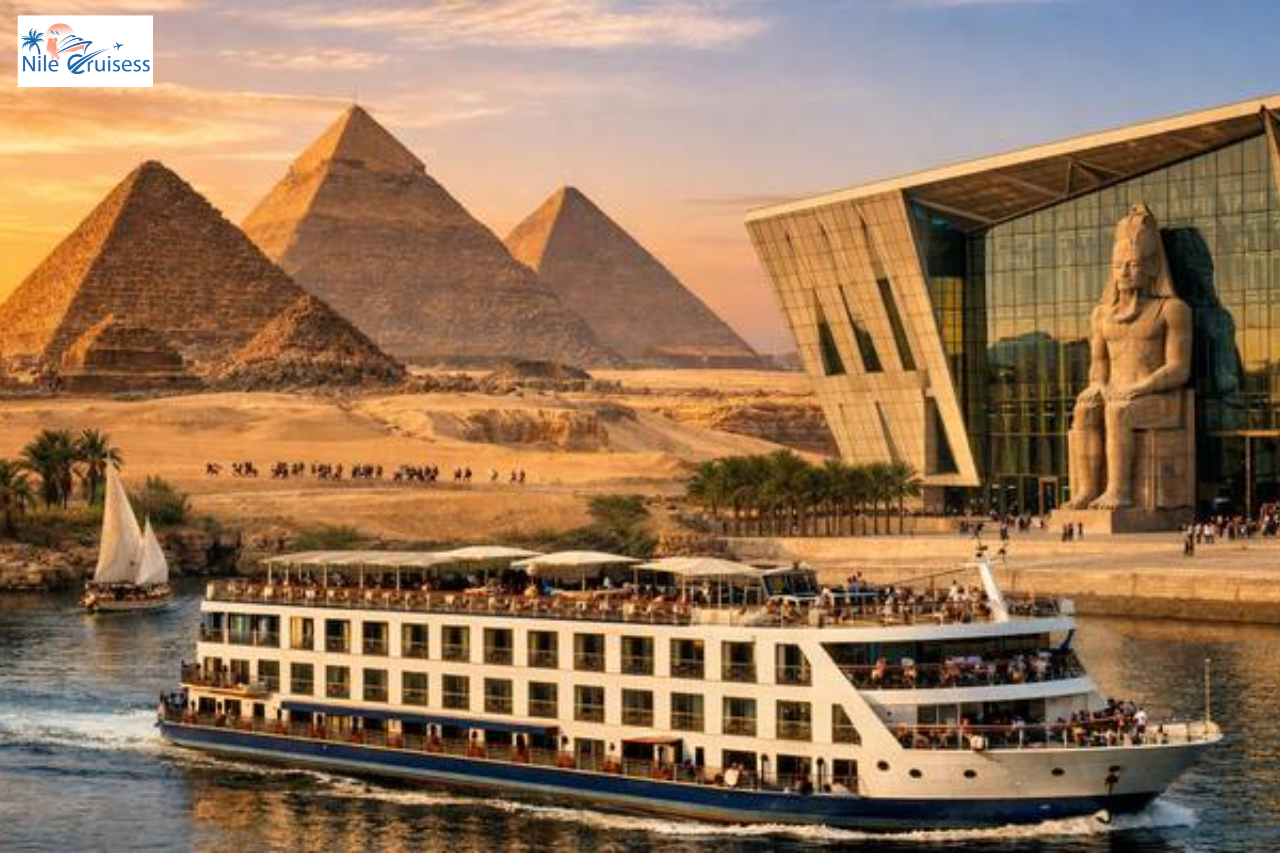
Beyond The Pyramids: What Your Nile Cruise Isn’t Telling You
Objective
This guide looks at what travellers often discover on a Nile journey only after they are already on the river. Many people come to Egypt thinking first about the pyramids. That makes sense. They are famous. But a cruise between Luxor and Aswan reveals a different side of the country. It shows how much of Egypt’s story lives farther south, along the Nile, in temples, tombs, villages, and quiet stretches of river life.
The goal here is to explain that deeper experience in a simple way. This is not just about major sites. It is also about the feeling of the journey itself. Nile Cruisess are often remembered for the peaceful rhythm of sailing, the comfort of river-view cabins, long moments on the sundeck, and the way ancient history appears slowly rather than all at once. The result is a trip that feels less like checking off landmarks and more like moving through a living landscape shaped by the river for thousands of years.
Key Takeaways
- A Nile cruise between Luxor and Aswan reveals a side of Egypt that goes far beyond the pyramids.
- Karnak Temple, the Valley of the Kings, Philae Temple, and Abu Simbel are part of a larger river story, not just separate stops.
- The cruise experience matters as much as the monuments, with calm cabins, refined meals, lounge spaces, and wide river views shaping the trip.
- Sailing through Upper Egypt also reveals village life, farmers by the riverbanks, and feluccas moving with the wind, which helps connect ancient Egypt to the present day. This is an inference from the route and the living Nile setting of Upper Egypt.
Table Of Contents
- Why The Pyramids Are Only Part Of The Story
- What A Nile Cruise Changes About The Way You See Egypt
- Karnak Temple Feels Different When You Arrive By River
- The Valley Of The Kings Is More Personal Than People Expect
- What The Ship Itself Adds To The Journey
- Philae Temple And The Softer Side Of Aswan
- Abu Simbel Expands The Story Of Ancient Egypt
- The Nile-Side Life Most Travellers Do Not Expect
- Why The Slow Pace Matters
- FAQs
Why The Pyramids Are Only Part Of The Story
The pyramids are powerful, but they do not tell the whole story of Egypt. A cruise in Upper Egypt shows how much of ancient Egyptian religion, kingship, and daily life were centred far from Cairo. Luxor, the site of ancient Thebes, includes Karnak and a wide west bank area filled with tombs and temple remains. Farther south, Philae and Abu Simbel belong to the great Nubian monument zone. Together, these places show a broader picture of Egypt’s past than many first-time visitors expect.
What changes on the Nile is perspective. You stop seeing monuments as isolated places on a map. Instead, they begin to feel linked by the river that gave them life. The Nile is not just scenery in the background. It is the thread that ties the journey together.
What A Nile Cruise Changes About The Way You See Egypt
Travelling by river slows everything down. That may be the most important thing a cruise offers. On land, travellers often move from bus to hotel to site to airport. On the Nile, the travel itself becomes part of the experience.
You wake up and look out at the water. You have breakfast while the river passes by. You return from an excursion and sit in a lounge while the shoreline drifts past. That calm rhythm changes how history feels. Instead of rushing through it, you absorb it in stages.
A luxury cruise adds comfort to that slower pace:
- cabins with broad river views
- dining rooms that break up the day gently
- quiet lounge areas for reading or resting
- sundecks where the landscape unfolds in silence
- spa or wellness spaces that make the journey feel restful
These details matter because Upper Egypt is rich and intense. After walking through temple courts or tomb passages, the comfort of the ship gives you time to take in what you just saw.
Karnak Temple Feels Different When You Arrive By River
Karnak is one of those places that changes scale once you stand inside it. UNESCO describes ancient Thebes as including the temples of Karnak and Luxor on the east bank and a large archaeological area on the west bank. That already tells you something important. Karnak is not a small monument. It belongs to a much larger sacred landscape.
What many travellers do not expect is how a cruise shapes the visit. When you come to Karnak as part of a river journey, it feels less like a detached excursion and more like the opening chapter of a larger story. You are not just visiting one temple. You are entering the ancient world of Thebes, a place of ritual, ceremony, royal power, and deep religious meaning.
Karnak can feel overwhelming at first. The columns are huge. The open courts feel endless. But the river journey helps frame it. You see it, return to the ship, and let the place settle in your mind while the Nile carries you south.
The Valley Of The Kings Is More Personal Than People Expect
The Valley of the Kings is one of the most famous burial grounds in the world, but it often feels quieter and more inward than travellers imagine. Britannica notes that it was the burial site of almost all the kings of the 18th, 19th, and 20th dynasties, and that the valley contains 62 known tombs.
That fact gives the site its weight, but the real feeling comes from the contrast with the rest of the journey. Karnak is broad and public. The Valley of the Kings feels hidden. You leave the river, move into the dry hills, and enter spaces built for silence and eternity.
This is one of the things your cruise may not fully prepare you for. These places are not just grand. They are emotional. The painted chambers, the narrow tomb passages, and the desert setting all create a different kind of connection to the ancient world. The cruise makes that contrast even stronger because you return afterwards to water, shade, and calm.
What The Ship Itself Adds To The Journey
A good Nile journey is not only about what happens on the ship. It is also about what happens on it.
Some of the most memorable moments are simple:
- watching sunrise from your cabin window
- drinking coffee while feluccas pass by
- sitting on the sundeck after a temple visit
- eating dinner while the river grows dark
- seeing villages and palm groves slide past in silence
This is where Nile Cruisess become something more than transportation. The ship becomes a quiet space between layers of history. It lets the journey breathe.
Luxury matters here in a soft way. It is not only about comfort for its own sake. It helps travellers stay present. A calm cabin, a comfortable chair, or a peaceful meal can make the whole experience feel less rushed and more thoughtful.
Philae Temple And The Softer Side Of Aswan
By the time the journey reaches Aswan, the mood often changes. Philae helps explain why. UNESCO lists it within the Nubian Monuments from Abu Simbel to Philae, and Britannica describes Philae as an island in the Nile in southern Egypt.
That island setting gives the site a different feel from Karnak or the Valley of the Kings. Philae feels graceful. It is still historic and powerful, but it also feels calm and elegant. The water around it changes the mood.
Aswan itself often feels gentler than Luxor. The river opens up. The light softens. The pace seems even slower. This shift is one of the hidden gifts of the cruise. You begin in the monumental world of ancient Thebes, then move toward a quieter southern atmosphere shaped by water, stone, and sky.
Abu Simbel Expands The Story Of Ancient Egypt
Abu Simbel often feels like the moment when travellers realise how large the ancient Egyptian world really was. UNESCO calls the Nubian Monuments from Abu Simbel to Philae an outstanding archaeological area that includes the temples of Ramses II at Abu Simbel and the Sanctuary of Isis at Philae.
Abu Simbel is not only memorable because of its scale. It also changes the story. It reminds travellers that Egypt’s history was not limited to the north or to the pyramid age. It reached deep into Nubia and took many forms across different places and periods.
Seen as part of a Nile journey, Abu Simbel feels less like a separate wonder and more like the far edge of a long river civilisation.
The Nile-Side Life Most Travellers Do Not Expect
One of the most moving parts of the trip is not always ancient. It is modern river life.
From the deck, you may notice:
- farmers working near the water
- small riverside settlements
- children waving from the banks
- feluccas moving slowly under sail
- date palms, fields, and open stretches of shore
These scenes matter because they show continuity. The monuments are ancient, but the river is still active, still central, still shaping daily life. That living background gives the historic sites more depth. They no longer feel cut off from the present.
Why The Slow Pace Matters
The best thing a Nile cruise gives many travellers is time. Time to look. Time to rest. Time to connect one place to another.
That slow pace makes the journey feel richer. Karnak is not just a temple. The Valley of the Kings is not just a tomb site. Philae is not just an island sanctuary. Abu Simbel is not just a dramatic monument. Each place becomes part of one long river story.
That is what Nile Cruisess can reveal when the journey is allowed to unfold naturally. Egypt becomes larger, quieter, and more human than many people expected before they arrived.
FAQs
Is A Nile Cruise Really Different From Visiting The Pyramids?
Yes. A Nile cruise focuses on Upper Egypt and reveals a different historical landscape centred on ancient Thebes, Nubian monuments, and life along the river.
What Are The Main Sites Between Luxor And Aswan?
The best-known places include Karnak Temple, the Valley of the Kings, Philae Temple, and often Abu Simbel as part of the wider southern journey.
Why Does The Cruise Feel More Relaxed Than Land Travel?
The ship combines transportation, lodging, dining, and downtime in one place, which reduces constant packing and road transfers.
What Makes Philae Different From Karnak?
Philae has an island setting and a calmer atmosphere, while Karnak belongs to a massive sacred complex in ancient Thebes.
Why Is Abu Simbel So Important?
It is part of the UNESCO-listed Nubian Monuments and reflects the southern reach and monumental ambition of ancient Egyptian rule.