
The Grand Egyptian Museum-GEM
The Grand Egyptian Museum (GEM): A Marvel of Modern Engineering and Ancient Heritage
The Grand Egyptian Museum (GEM) is poised to become the largest archaeological museum in the world. Housing some of the most significant artifacts from ancient Egypt, including the complete Tutankhamun collection. Located just 2 kilometers from the Giza Pyramid complex. This museum is not only a testament to Egypt’s rich history but also a masterpiece of modern architecture and engineering. With its innovative design and symbolic elements, GEM bridges the past with the present, creating a unique cultural landmark.
The Symbolism Behind the GEM’s Design
The Alignment with the Sun: A Tribute to King Ramesses II
One of the most captivating features of the GEM is the twice-yearly solar alignment with the statue of King Ramesses II. This event is not a mere coincidence but a meticulously planned phenomenon that echoes the ancient architectural achievements seen at the Abu Simbel temple. There, the sun’s rays illuminate the face of King Ramesses II twice a year, on October 21 and February 21. Similarly, at GEM, the sun’s rays shine upon the face of the statue of King Ramesses II, located in the Grand Hall, on these same dates.
This alignment was the brainchild of Major General Atef Moftah, the General Supervisor of the Grand Egyptian Museum Project. The idea, first proposed in 2019, was brought to life through a combination of astronomical studies and precise engineering. The result is a modern echo of an ancient marvel. Linking GEM with the historical event at Abu Simbel is a feature that is expected to become a focal point of cultural celebrations and tourism in the future.
The Pyramid Wall: A Façade Rich in Symbolism
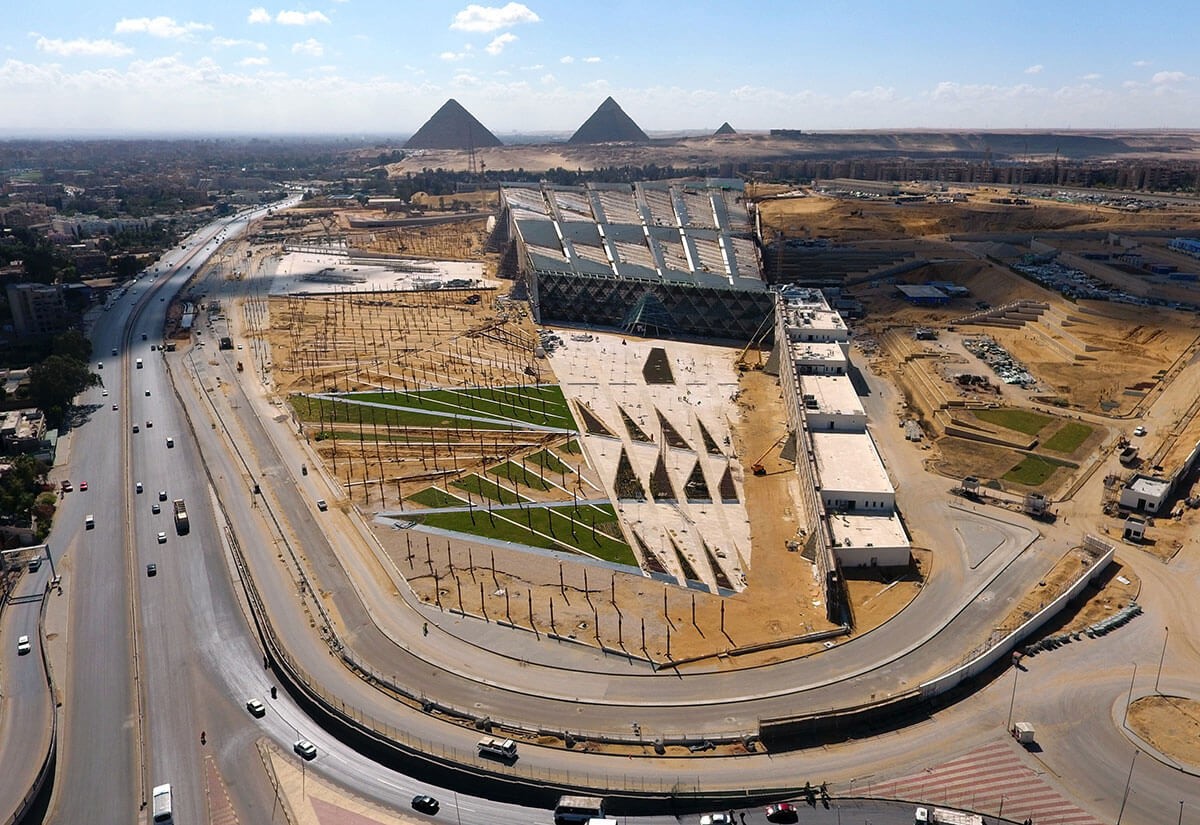
The façade of the Grand Egyptian Museum is another significant element, designed to represent the essence of Egyptian civilization. The eastern façade stands 46 meters high and stretches over 800 meters. Incorporates seven pyramids—a number deeply rooted in Egyptian symbolism. These pyramids are not merely decorative; they are an architectural embodiment of Egypt’s historical continuity and influence.
The seventh pyramid faces north towards the Giza Plateau. Symbolizes Egypt’s enduring impact on global civilization, particularly its contributions to science, art and literature. The façade’s design, constructed by Egyptian craftsmen using locally sourced marble from Sinai, reflects a deep connection to Egypt’s ancient heritage. This choice of materials and craftsmanship underscores the continuity of Egyptian engineering and architectural prowess from ancient times to the present.
Originally, the façade was intended to be a metal structure with transparent marble, but this plan was revised to better align with the museum’s narrative and character. The final design was completed at a fraction of the original estimated cost. Not only enhances the museum’s aesthetic appeal but also reinforces its cultural significance.

The Architectural Grandeur of GEM
The Grand Egyptian Museum is more than just a repository of artifacts; it is an architectural marvel in its own right. The building is designed as a chamfered triangle, strategically positioned to align with the Great Pyramid of Khufu and the Pyramid of Menkaure. This alignment further ties the museum to Egypt’s ancient past, creating a direct visual and symbolic connection to the pyramids.
A notable feature of the museum is the alabaster stone wall that forms the front façade, lending the structure a translucent quality that glows with the natural light. Inside, the main atrium serves as a grand entrance, housing large statues that welcome visitors into the world of ancient Egypt.
The museum is also equipped with cutting-edge technology, including virtual reality, to enhance the visitor experience. It is designed to be an international hub for museum communication, fostering connections with other institutions worldwide. In addition to exhibition spaces, GEM will feature a children’s museum, a conference center and workshops that echo the functions of ancient Pharaonic places. Providing a comprehensive cultural experience.
The Future of the Grand Egyptian Museum
The Grand Egyptian Museum is set to house over 50,000 artifacts, with the potential to display up to 100,000 items. This vast collection, coupled with the museum’s innovative design and technological advancements. Will make GEM the most significant archaeological museum in the world.
The opening of GEM is not just a cultural milestone for Egypt but also a global event, marking the culmination of years of planning, design and construction. It represents a new chapter in the preservation and celebration of Egypt’s ancient heritage. Offering visitors from around the world a unique opportunity to connect with one of the most influential civilizations in history.
Conclusion
The Grand Egyptian Museum is a monumental project that blends ancient heritage with modern innovation. From the symbolic alignment of the statue of King Ramesses II with the sun to the pyramid-inspired façade, every aspect of GEM is designed to honor Egypt’s rich history while looking forward to the future. As the largest archaeological museum in the world, GEM will not only preserve Egypt’s past but also serve as a beacon of cultural exchange and education for generations to come.




It will be great Museum